
Lumps and bumps - specialist assessment
Expert investigation and treatment of lumps in the mouth, face, and neck - including early detection of serious conditions and definitive treatment on-site.
Specialist service: This treatment is provided by Ms. Soudeh Chegini, Consultant Oral and Maxillofacial Surgeon, who practises on-site at New Forest Family Dental.
About the assessment
Any new lump deserves expert attention.
New lumps in the mouth, face, or neck are understandably worrying. The great majority are benign - minor salivary gland lesions, cysts, lymph nodes responding to infection, or innocent soft tissue growths. But some require definitive diagnosis and treatment, and a small number are early signs of more serious pathology.
The only way to know for certain is to have a lump properly assessed by a specialist with the experience and tools to investigate it correctly. Ms. Soudeh Chegini offers exactly this - a thorough, systematic evaluation with access to imaging and histopathology.
Don't wait and hope a lump will go away. An early specialist assessment gives you peace of mind if it's benign, and the best possible outcome if it's not.
Our approach
Expert assessment from consultation to result.
Expert assessment
Ms. Chegini has extensive experience in evaluating lumps of the mouth, face, and neck - including distinguishing between benign and potentially serious lesions.
Accurate investigation
Where needed, we arrange imaging (ultrasound, CT, MRI) and biopsy to reach a definitive diagnosis rather than offering a provisional opinion.
Early detection
Early identification of any concerning lesion dramatically improves outcomes. We treat every lump with the appropriate level of urgency.
Peace of mind
Most lumps are benign. A specialist assessment gives you a reliable, authoritative answer - replacing uncertainty with clarity.
On-site investigation
Many investigations can be arranged on-site or through our local network of imaging centres, avoiding unnecessary delays.
Definitive treatment
If a lump requires removal, biopsy, or further intervention, we can carry this out on-site without the need for a hospital referral in many cases.
Your pathway
From first appointment to clear diagnosis.
- 1
Consultation
Ms. Chegini takes a detailed history of the lump - when it appeared, whether it has changed, associated symptoms, and relevant medical history.
- 2
Clinical examination
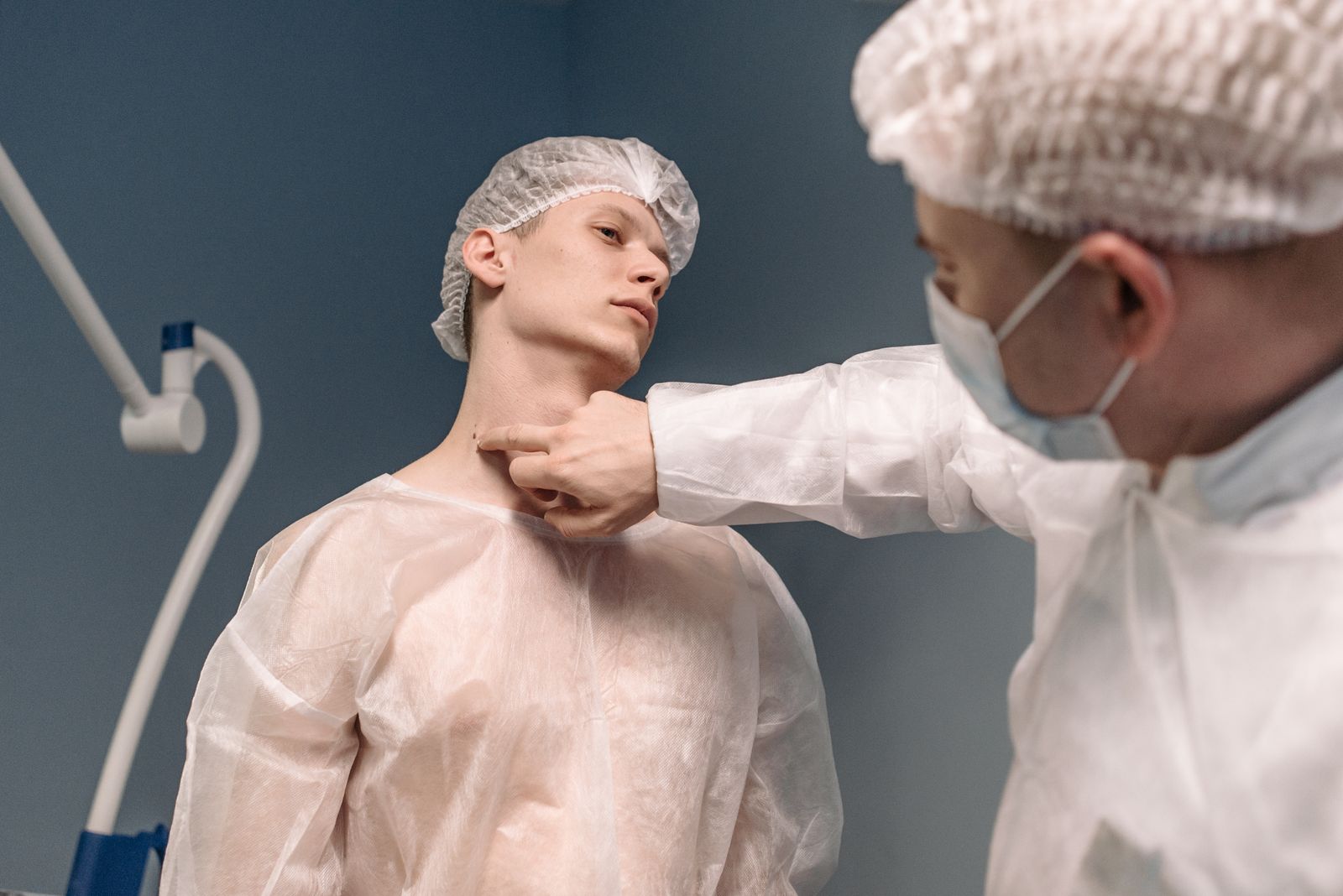
She examines the lump carefully, assessing its size, consistency, mobility, and relationship to surrounding structures.
- 3
Imaging if needed
Depending on the findings, ultrasound, CT, or MRI may be arranged to further characterise the lesion before deciding on management.
- 4
Biopsy if indicated
If a tissue diagnosis is needed, Ms. Chegini can arrange a fine needle aspiration or excisional/incisional biopsy under local anaesthetic.
- 5
Histology results
We review your results with you, explain the findings clearly, and discuss the implications for any further treatment needed.
- 6
Treatment and follow-up
Where treatment is required - surgical excision, further investigation, or specialist referral - we arrange this promptly and keep you informed.
What we assess
Types of lumps we commonly see.
We assess and treat a wide range of lumps and swellings, including:
- Lumps or swellings inside the mouth
- Lip, cheek, or tongue lumps
- Neck masses or enlarged lymph nodes
- Salivary gland swellings
- Skin cysts or lipomas of the face and neck
- Firm or rapidly growing lumps of any site
- Long-standing lumps that have recently changed
- Oral papillomas and benign growths

Don't wait
Book a specialist assessment today
Any new lump that persists for more than two to three weeks should be seen. Early assessment gives the best outcomes and the quickest peace of mind.
FAQs
Frequently asked questions.
Should I be worried about a lump in my mouth?
Most oral lumps are benign - such as minor salivary gland cysts, irritation fibromas, or papillomas. However, any lump that persists for more than two to three weeks, grows rapidly, or causes other symptoms should be assessed by a specialist promptly.
What happens during a biopsy?
A biopsy involves removing a small piece of tissue under local anaesthetic for examination by a pathologist. It is a straightforward procedure that takes only a few minutes and provides a definitive tissue diagnosis.
How quickly will I get results?
Histopathology results typically take one to two weeks. We will contact you as soon as results are available and arrange an appointment to discuss them if treatment is needed.
What if the lump turns out to be cancer?
If a malignancy is confirmed, we refer you to the relevant specialist team - typically via a two-week wait pathway - as quickly as possible. Early detection gives the best possible outcomes, which is exactly why prompt assessment matters.
Ready to meet your new dental team?
Same-day appointments available · Denplan members welcome