
Apicectomy - saving teeth with root tip surgery
Specialist microsurgical removal of infected root tips to preserve your natural tooth when root canal treatment alone cannot resolve the problem.
Specialist service: This treatment is provided by Ms. Soudeh Chegini, Consultant Oral and Maxillofacial Surgeon, who practises on-site at New Forest Family Dental.
About the procedure
What is an apicectomy?
An apicectomy is a minor surgical procedure performed to remove the infected tip of a tooth root when root canal treatment has not fully resolved the infection. It is a tooth-saving option used when retreatment of the root canal is not possible or has already been attempted without success.
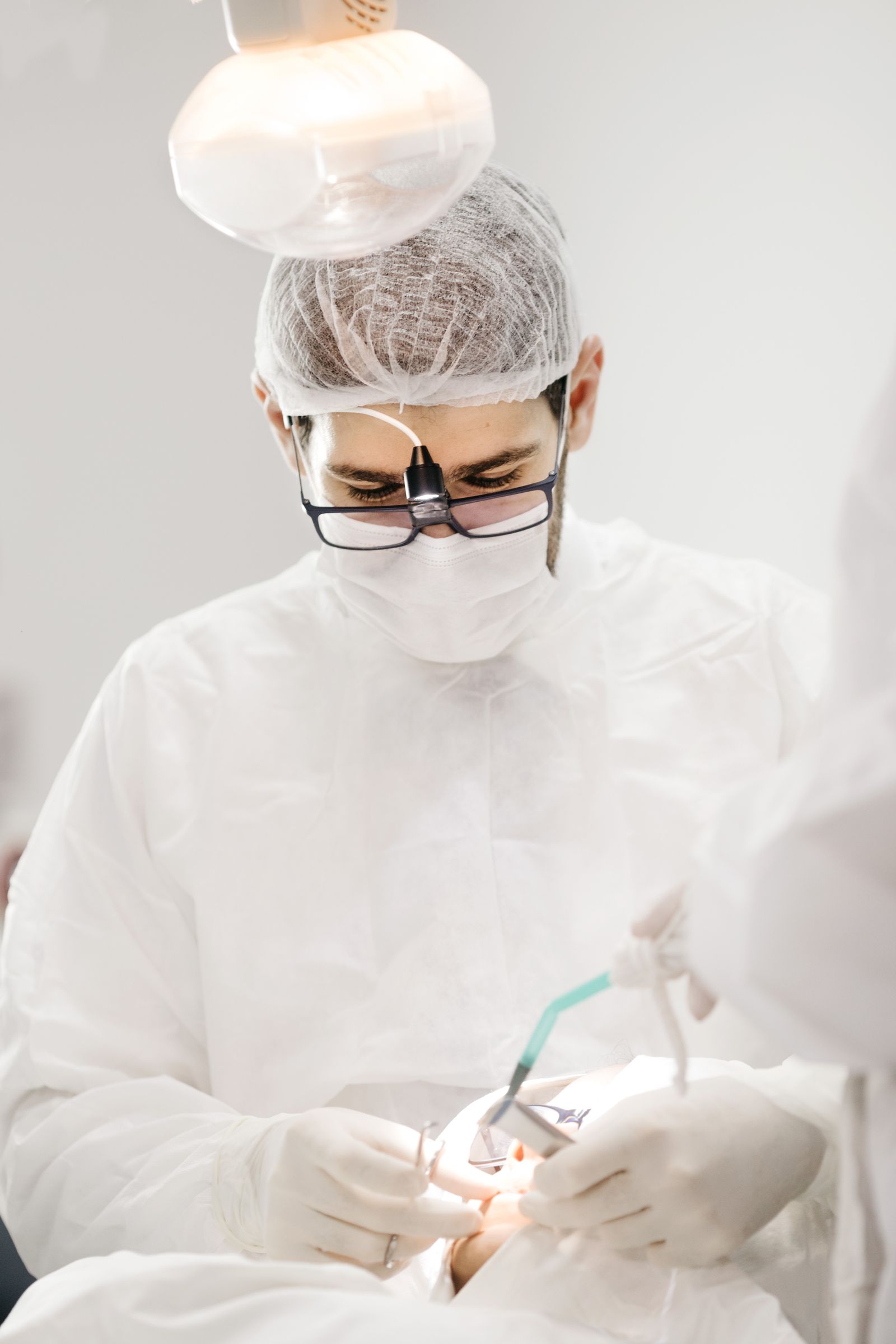
During the procedure, Ms. Chegini makes a small incision in the gum above the affected root, removes the last few millimetres of the root tip along with any associated cyst or infected tissue, and seals the root end with a biocompatible material.
The procedure is carried out under local anaesthetic, using magnification and microsurgical instruments for precision. Detailed CBCT imaging is used beforehand to plan the surgery and minimise risk to adjacent structures.
Why apicectomy
A precise, tooth-preserving solution.
Save your tooth
Apicectomy removes the infected root tip without removing the tooth itself - preserving your natural tooth when root canal retreatment is not possible.
Detailed pre-op imaging
CBCT scanning allows precise 3D assessment of the root tip and surrounding bone before surgery, reducing risk and improving accuracy.
Microsurgical technique
Ms. Chegini uses magnification and specialist microsurgical instruments for greater precision, less tissue trauma, and faster healing.
High success rate
Apicectomy has a well-established success rate when performed by an experienced surgeon on carefully selected cases.
Comfortable procedure
The procedure is carried out under local anaesthetic. Most patients are surprised by how manageable the experience is.
Full aftercare support
Written aftercare instructions, prescribed medications, and a follow-up review are included with every apicectomy procedure.
Your procedure
Step by step, from planning to healing.
- 1
Pre-operative assessment
Ms. Chegini reviews your dental history, examines the tooth, and arranges CBCT imaging to plan the surgery in detail.
- 2
Surgical consent
The procedure, its benefits, risks, and alternatives are explained fully. We answer all your questions before obtaining your consent.
- 3
Procedure under local anaesthetic
A small incision is made in the gum above the tooth root. The infected root tip (approximately 3mm) is removed along with any associated cyst or granuloma.
- 4
Root-end filling
The cut end of the root is prepared and sealed with a biocompatible material to prevent future bacterial contamination.
- 5
Wound closure
The gum is sutured and haemostasis achieved. The procedure typically takes 45 to 90 minutes depending on tooth position.
- 6
Follow-up and review
Review appointments will be arranged if clinically indicated, including a radiographic review to confirm bone regeneration.
Who is it for?
When is apicectomy appropriate?
Apicectomy may be recommended in the following situations:
- Persistent periapical infection after root canal treatment
- Anatomical complexity preventing root canal retreatment
- Blocked or calcified root canals
- Cyst formation at the root apex
- Fractured instrument within the root canal
- Failed root canal retreatment
- Overfilled root canal causing periapical symptoms

Trying to save your tooth?
Book a specialist consultation
Ms. Chegini will assess whether apicectomy is appropriate for you and give you an honest prognosis before committing to any treatment.
FAQs
Frequently asked questions.
What is an apicectomy?
An apicectomy is a minor surgical procedure to remove the tip of a tooth root and any associated infected tissue. It is used when root canal treatment alone has not been able to eliminate the infection - usually due to anatomical complexity.
What is the success rate?
Studies show success rates of around 85 to 97% for apicectomy performed by experienced oral surgeons, particularly when CBCT planning and microsurgical technique are used. We will give you a realistic assessment of your specific case.
How long is recovery?
The area will be tender for two to three days. Most patients take over-the-counter pain relief for 24 to 48 hours. You can eat a soft diet from the day of surgery. Return to normal activity is usually possible within one to two days.
What are the risks?
All surgical procedures carry risk. For apicectomy these include temporary numbness (paraesthesia) of the chin or lip if the lower jaw is involved, incomplete healing, and the possibility that the tooth may still require extraction if surgery fails. Ms. Chegini will discuss these with you in detail.
What happens if apicectomy fails?
If the apicectomy does not fully resolve the infection, extraction of the tooth may ultimately be necessary. However, this is uncommon in carefully selected cases managed by an experienced surgeon.
Ready to meet your new dental team?
Same-day appointments available · Denplan members welcome